

A good garment can be undone by poor gowning. The order matters because each step should cover what came before without touching anything that is less clean.
Before you start
- Remove jewellery, watches, make-up and personal items.
- Change into plant clothing or lint-free undergarments.
- Wash and dry hands, then sanitise.
The sequence for aseptic areas
- Head cover or hood. Cover all hair and facial hair first, so nothing falls onto the coverall.
- Face mask. Fit the mask to cover nose and mouth fully.
- Sanitise hands or put on a first pair of gloves.
- CoverallA one-piece suit covering the body, arms and legs, worn as the main cleanroom garment. Styles include stand-up collar and attached hood.. Unfold it from the inside, hold it off the floor, step in one leg at a time, then zip up and close the collar over the hood.
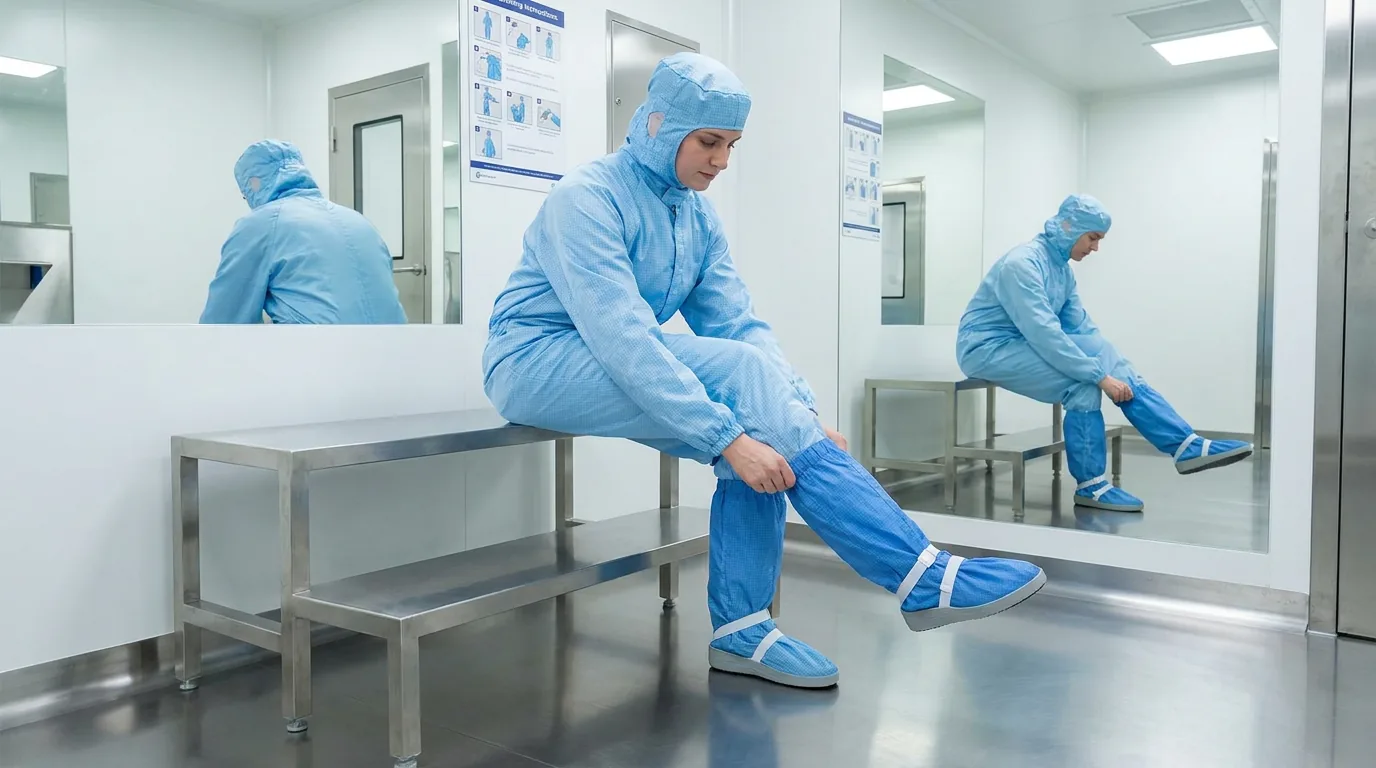
- Booties. Sit on the step-over bench. Put on one bootie and swing that leg over to the clean side, then repeat. Tuck the coverall leg inside the bootie and fasten.
- Eye protection. Goggles go on last at head level.
- Sterile gloves. Pull glove cuffs over the coverall sleeves.
- Mirror check. Check no skin or hair is visible and every closure is fastened.
Common mistakes
- Letting the coverall touch the floor while putting it on
- HoodA head cover that encloses hair, ears and neck, with the lower edge tucked into the coverall collar. Required as sterile headgear in Grade A and B. tucked outside the collar instead of inside
- Gaps between glove and sleeve
- Touching the face or mask after gloving
Training and qualification
EU GMP Annex 1The European guideline for manufacturing sterile medicinal products, revised in 2022. Section 7 sets gowning expectations for each cleanroom grade. expects operators working in Grade AThe EU GMP zone for high risk aseptic operations such as filling and making sterile connections. Equivalent to ISO 5 for particles at rest and in operation./B areas to be trained and qualified in gowning, and to be re-assessed periodically. Use a written SOPStandard operating procedure: your site's written instructions, for example for gowning. with photos of each step, and check gowning with surface sampling during qualification.
We can kit garments in the order they are put on, which makes the sequence easier to follow.
Frequently asked questions
Should the hood go inside or outside the coverall?
Inside. The hood is tucked into the coverall collar so there is no gap at the neck, then the collar is closed over it.