

Guides for cleanroom garment buyers
Quick references for QA, production and procurement teams: sizes, what to wear in each grade, the gowning order and the documents to ask a supplier for.
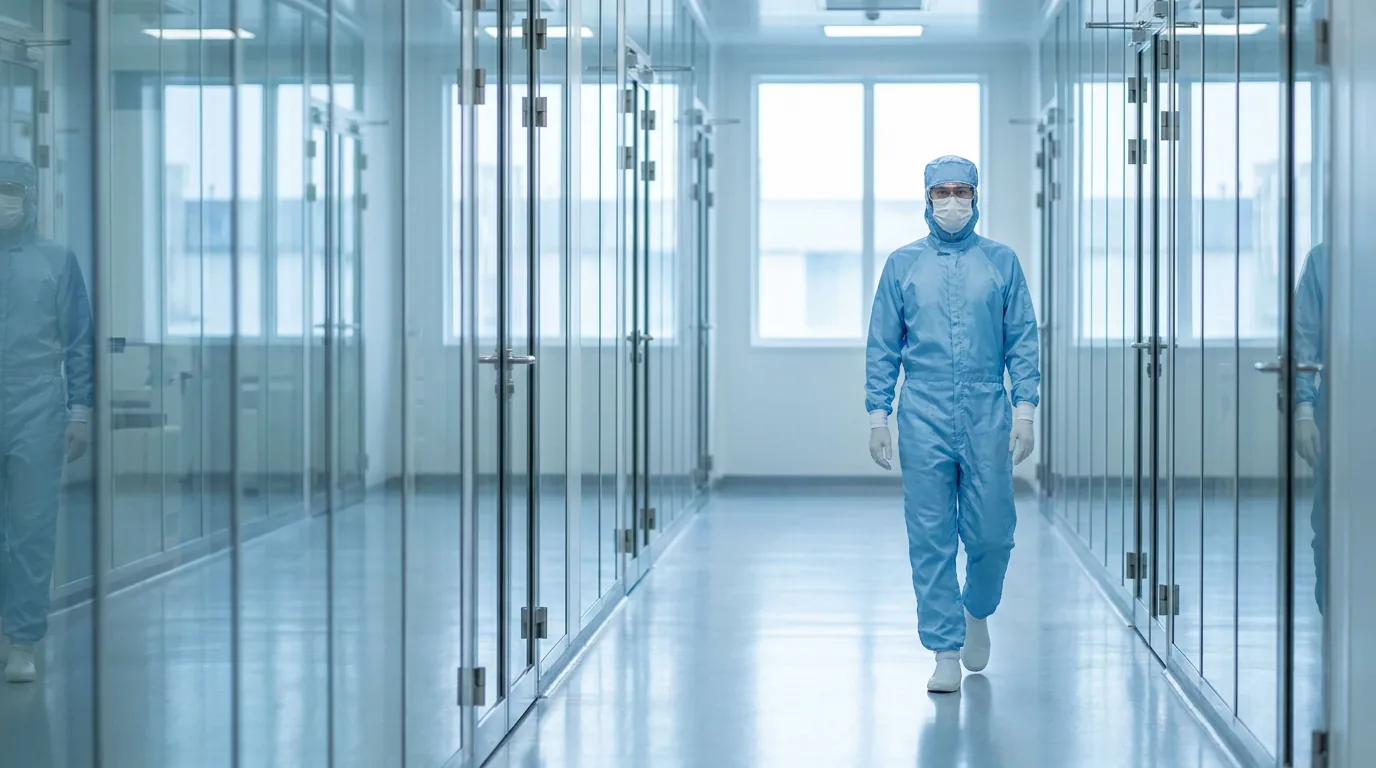
Find the right size
Measurements in centimetres. Choose by height first, then check chest. Confirm with a sample before a bulk order.
Coveralls, undergarments and lab coats
| Size | Height | Chest | Waist |
|---|---|---|---|
| S | 155 to 163 | 86 to 94 | 72 to 80 |
| M | 163 to 170 | 94 to 102 | 80 to 88 |
| L | 170 to 177 | 102 to 110 | 88 to 96 |
| XL | 177 to 184 | 110 to 118 | 96 to 104 |
| 2XL | 182 to 189 | 118 to 126 | 104 to 112 |
| 3XL | 186 to 193 | 126 to 134 | 112 to 120 |
| 4XL | 189 to 196 | 134 to 142 | 120 to 128 |
| 5XL | 192 to 199 | 142 to 150 | 128 to 136 |
Booties and shoe covers
| Size | UK shoe | EU shoe |
|---|---|---|
| S | 5 to 6 | 38 to 39 |
| M | 7 to 8 | 40 to 42 |
| L | 9 to 10 | 43 to 44 |
| XL | 11 to 12 | 45 to 47 |
Size by the shoe worn inside the bootie. If in doubt, go one size up.
SMR surgical gloves
| Size | Palm (mm) |
|---|---|
| 6.0 | 152 |
| 6.5 | 165 |
| 7.0 | 178 |
| 7.5 | 191 |
| 8.0 | 203 |
| 8.5 | 216 |
Palm circumference around the knuckles, excluding the thumb.
SMR examination gloves
| Size | Palm width (mm) |
|---|---|
| XS | up to 80 |
| S | 80 to 90 |
| M | 90 to 100 |
| L | 100 to 110 |
| XL | over 110 |
Hoods come in universal and large. Masks and caps are one size.
What to wear in each cleanroom grade
A typical starting point based on EU GMP Annex 1The European guideline for manufacturing sterile medicinal products, revised in 2022. Section 7 sets gowning expectations for each cleanroom grade. practice. Your own SOPStandard operating procedure: your site's written instructions, for example for gowning. and risk assessment decide the final gown.
| Area | Typical use | Typical garments |
|---|---|---|
| Grade AThe EU GMP zone for high risk aseptic operations such as filling and making sterile connections. Equivalent to ISO 5 for particles at rest and in operation. and BThe background environment for Grade A in aseptic processing. ISO 5 at rest and ISO 7 in operation. Operators wear the full sterile gown. (ISO 5) | Aseptic filling and sterile connections | Sterile-ready hood, coverall and knee-length booties, mask, goggles, sterile gloves |
| Grade CA clean area for less critical steps in sterile manufacturing, such as solution preparation. ISO 7 at rest and ISO 8 in operation. (ISO 7) | Solution preparation, component washing | Hood or cap, coverall or two-piece suit, booties or dedicated shoes, mask as per your SOP |
| Grade DThe lowest EU GMP clean area grade, used for support activities such as component handling. ISO 8 at rest. (ISO 8) | Support areas, component handling | Head cap, coverall or lab coat, shoe covers or dedicated shoes |
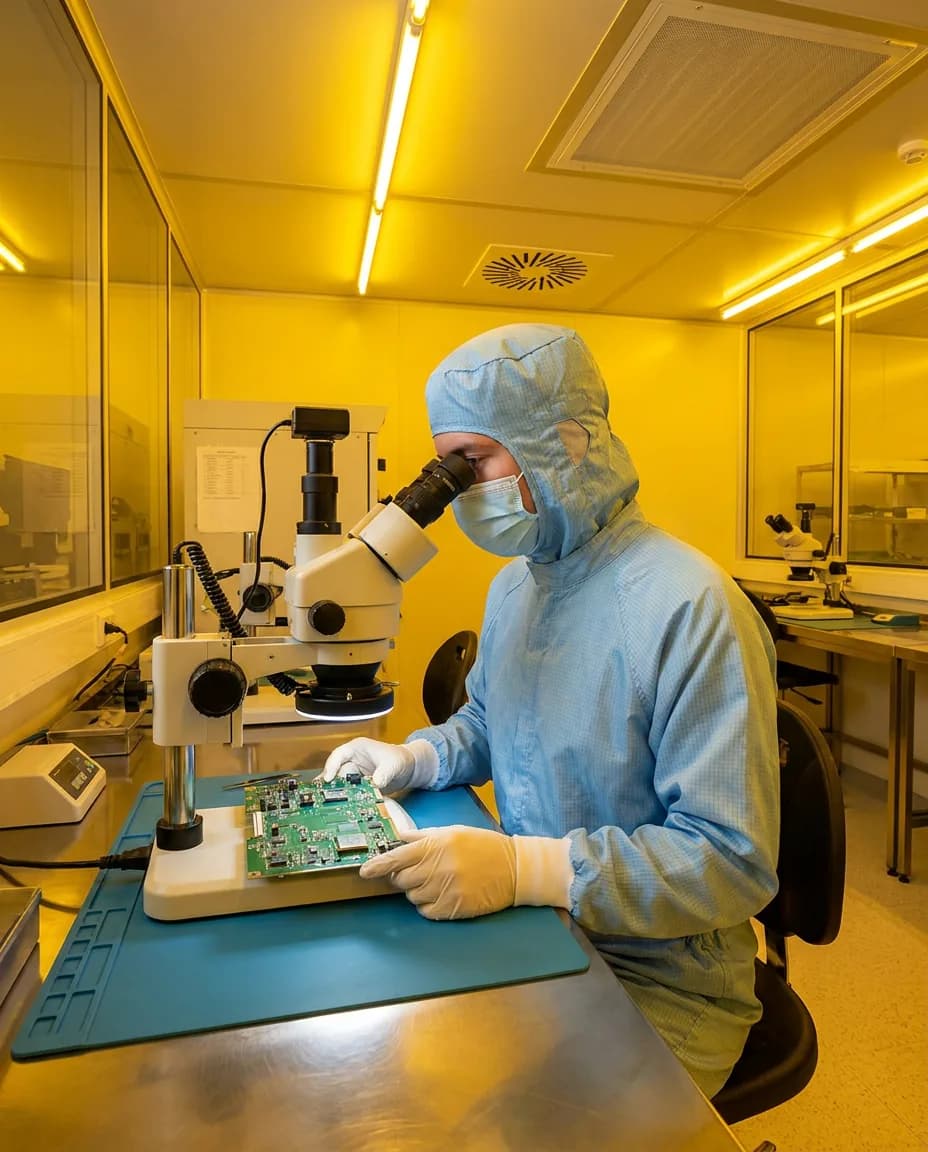
| ESDElectrostatic discharge: a sudden release of static electricity that can damage electronic parts or ignite flammable vapours. areas | Electronics assembly and testing | Antistatic carbon grid coverall or lab coat, hood or cap, booties |
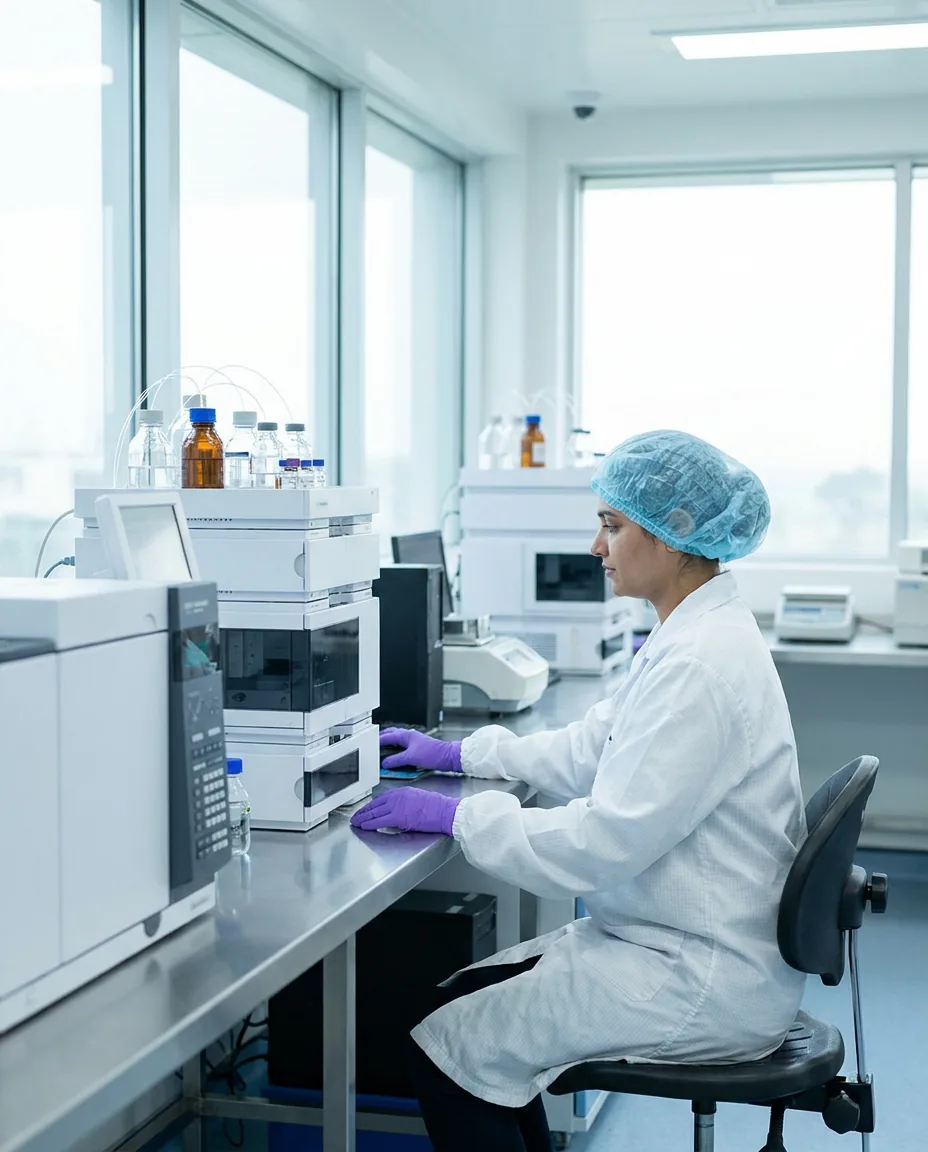
| QC and pharmacy labs | Testing labs, hospital pharmacy | Lab coat or apron, head cap, mask, examination or surgical gloves |
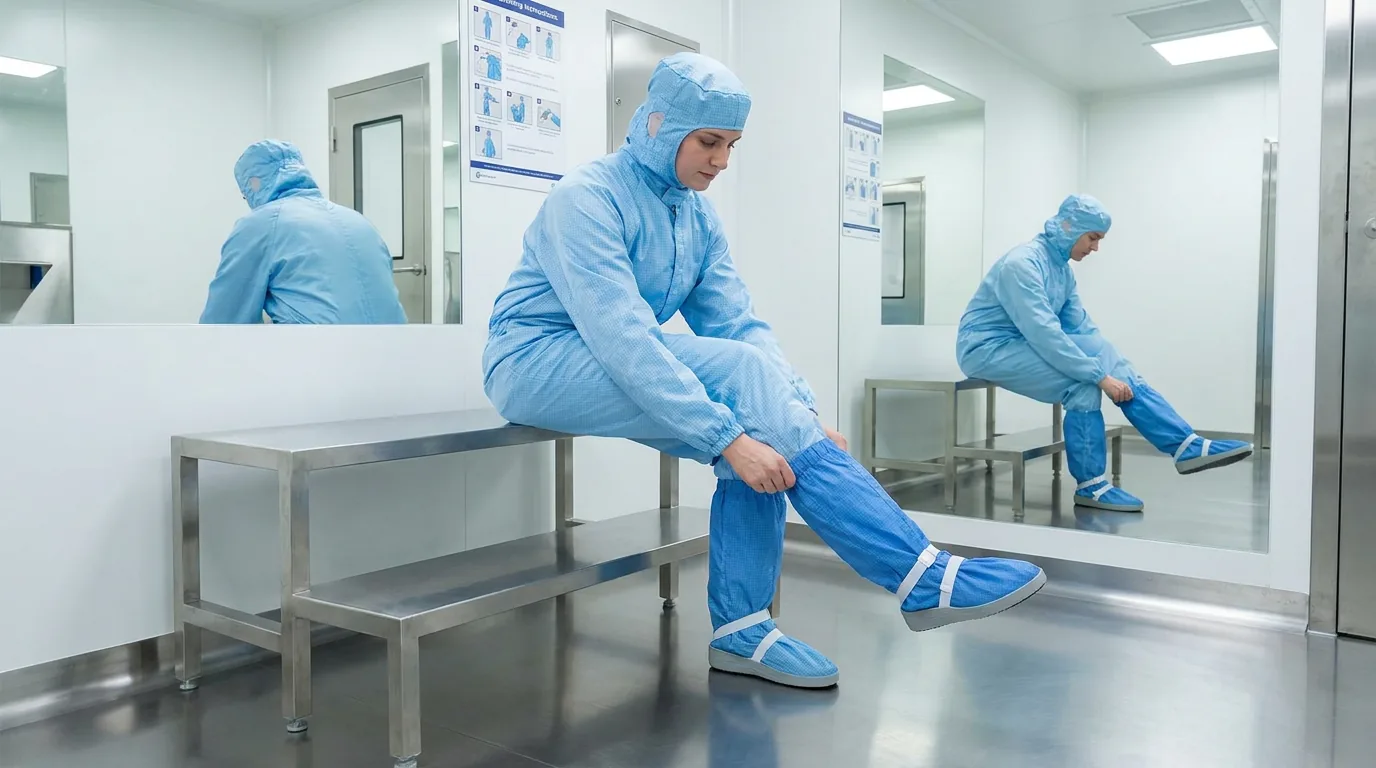
The gowning order, top to bottom
Clean to dirty, top to bottom, so nothing already worn is contaminated by the next item.
- 01PrepareRemove jewellery and make-up, change into undergarments or plant clothing, wash and sanitise hands.
- 02Head firstPut on the head cap or hood so hair is contained before anything else goes on.
- 03MaskFit the face mask over nose and mouth, snapped or tied to the hood.
- 04CoverallStep in without letting the garment touch the floor. Zip fully and tuck the hood skirt inside the collar.
- 05BootiesPull on one bootie at a time over the coverall leg, crossing the step-over bench as you go.
- 06GogglesPut on goggles last at the head, so the hood is not disturbed.
- 07GlovesPut on gloves over the coverall cuffs. In Grade A and B, sterile gloves are sanitised often.
- 08CheckCheck in the mirror: no skin or hair visible, all closures fastened.
Looking after reusable garments
- Use a cleanroom laundryGarments are washed in filtered water and dried in a clean environment, not in a standard laundry.
- Sterilise in your validated cycleOur sterile-readySupplied clean and packed so your site can sterilise it in its own validated autoclave cycle before use. garments go through your own steam autoclaveA pressure vessel that sterilises items with saturated steam, commonly at 121 °C or 134 °C. Reusable cleanroom garments are usually autoclaved after laundering. cycle before use.
- Inspect and track every garmentCheck seams, zips and cuffs after each cycle and log the count, so garments are retired on time.
Documents to ask your supplier for
What a pharma QA team usually needs to approve a garment supplier. We share all of these during supplier qualificationThe checks a buyer's QA team runs before approving a new supplier: documents, samples, audits and test reports..
- Technical data sheetTechnical data sheet: a summary of fabric and garment properties. for each fabric and garment
- Size chart and fit guide
- Care, laundering and autoclave guide
- Fabric test reports, such as particle and filtration data
- Certificate of conformityCertificate of conformity: a document confirming a batch meets the agreed specification. for each batch
- Quality certificates and company registrations
Everything else in one place
Tell us what your cleanroom needs
Share your ISO class, quantities and timelines. We reply with options, a quote and sample availability within one working day.